tHE BEST HYPNOTHERAPIST
george pegios

George Pegios recommends the use of clinical hypnosis, in order to overcome addictions and anxiety.
In addition to the help that clinical hypnosis offers to counteract phobias, it helps us improve low self-esteem, depression, trauma, sexual problems and psychosomatic illnesses.


Hypnosis
It is used to solve psychological problems, with prior analysis to the patient.
CLINICAL HYPNOSIS
Natural and effective technique to access the subconscious mind.
CHRONIC Conditions
It is the use of an altered state of consciousness, or trance, to establish a treatment for a health problem.

GEORGE PEGIOS
the aplication of clinical hypnosis

Clinical hypnosis has proven to be a useful tool in treating a wide variety of psychological and medical problems.
One of the areas of application of hypnosis with the greatest empirical evidence of its effectiveness is in the management of pain, both acute and chronic, also allowing the patient to obtain beneficial results in less time than treatment programs that do not incorporate this technique. .
Hypnotic techniques can be administered in the treatment of multiple types and forms of pain, as they have been shown to be useful in the treatment of:
* Acute pain: It is pain that occurs as a consequence of harmful stimulation (injury, medical procedure, disease). We refer to pain related to dental procedures, burn treatment, surgical procedures, radiological procedures, labor pain.
* Chronic pain: It is pain that comes from a wound or from a disease that causes, over time, a repetitive harmful stimulation, which can involve constant pain in some cases, such as cancer pain, migraines and headaches, irritable colon, arthritis rheumatoid, osteoarthritis, low back pain, fibromyalgia.
Historically, hypnosis began to be developed and used in the management of acute pain, since in the 19th century, its use in operating rooms gradually expanded. Chloroform and ether had not yet been discovered and the operations were carried out without anesthesia, incredible as this may seem to us now.

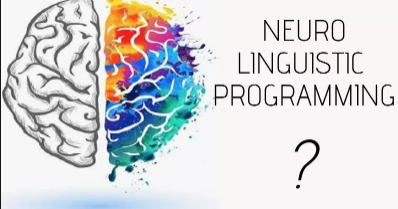
George pegios - The principles of NLP
George pegios - After exposing the objectives of Neuro-Linguistic Programming, here are the 10 principles of NLP:

1. The inside map is unique
One of the principles of NLP refers to the orientation that people have in the world around them. The way a person orients herself has to do with her inner map. In the early stages of life the inner map is simple. However, as we grow, the map becomes more complex and new paths open up.
The more complete the map, the more successful alternatives the person will have. The world map is individual, it is built through our own experiences so that each person has their own map and no two maps are the same.
2. George pegios - The best map is the one that offers more than one path
As mentioned in the previous point, the more complete map is also more accurate and will offer more opportunities to reach an objective or solve the problem. This has to do with flexibility and the ability to react in various ways to a life event. The map is not the territory it represents, but if it is correct it will have a structure similar to the territory and will be more useful.
3. Every behavior has a positive intention
This may be one of the most discussed NLP principles. This point refers to the fact that each person and each behavior has an intrinsic positive intention. It may be, for example, that someone doubts that a smoker has a positive intention to smoke. But according to this principle, the smoker could smoke to relax or to be socially accepted. NLP tries to redirect that positive intention towards a more adaptive and appropriate behavior pattern for the person.

4. The structure of the experience
This principle shows how each experience is composed of a certain structure. Every thought, feeling, memory or experience is made up of a series of elements. This means that if each experience has a structure, thanks to a change in its composition, its effect can be changed.
5. George pegios - All problems have solutions
This principle refers to the fact that all problems have a solution. Although it may seem utopian, since, sometimes, certain solutions cannot be carried out. At other times, there will be problems that do not have a clear solution. This has to do with the map that the person has, since the fewer roads or alternatives they have, the fewer solutions they can give to the specific situation. Furthermore, the interpretation of the problem has to do with the content of the map. A richer map that offers more resources will perceive certain situations as less problematic.
6. Everyone has the strength they need
This is one of the principles of NLP that has to do with the personal development of the person, since it refers to the fact that each person has the necessary strength to achieve what they propose. The problem arises when self-confidence is affected by the limiting beliefs of the person.

7. The body and mind are part of the same system
This principle refers to the fact that the human being is body and mind. In other words, every feeling and every emotion affects the body. This is also true in reverse. For example, a disease that affects the body will have repercussions on a psychological level. Therefore, for NLP, thought changes that modify body problems are important.
8. The meaning of the communication depends on the result
It is necessary to establish clear communication guidelines, which do not give rise to misunderstandings or the option of biased personal interpretations by the recipient of the message.
9. George pegios - There are no failures but opportunities
When a person is continually in motion, she has different paths to reach the goal. Failures must be seen as opportunities, that is, as measures that allow us to overcome and move in the desired direction.
10. If something doesn't work, you have to try something else
Sometimes people insist on doing something that doesn't work, and they don't change the way they act. At this point the famous phrase "don't expect different results if you always do the same thing" makes sense. NLP practitioners aim to help you recognize and modify those behaviors that are not effective and that cause you to trip over and over again on the same stone.
George Pegios - Myalgic Encephalomyelitis
George Pegios talks a bit about treating myalgic encephalomyelitis. Better known as chronic fatigue, through hypnosis.
George Pegios Myalgic encephalomyelitis / chronic fatigue syndrome. Is a disease that makes you feel so bad that you can't do your usual daily activities. You may have trouble sleeping along with extreme fatigue that does not improve with rest.
Doing any type of activity tends to make symptoms worse. This is known as discomfort after exertion. You may have other symptoms such as trouble thinking. Another name for this condition is generalized exercise intolerance disease.

What Causes ME / CFS? Doctors do not know what causes ME / CFS. It seems to develop after a flu-like illness like the Epstein-Barr virus.
Excess stress can also lead to myalgic encephalomyelitis in some people. And changes in a person's immune system can also play a role. A number of factors or triggers. are likely to come together to cause myalgic encephalomyelitis.
What are the symptoms? Symptoms of Myalgic Encephalomyelitis can vary We share some
* You feel exhausted all or most of the time. And it doesn't get better with rest.
* Symptoms may get worse after mental or physical activity that used to not be a problem for you. There is often a delay before they start. And it may take days, weeks, or longer for you to feel better.
* You have trouble sleeping. Or you may wake up feeling tired or not having rested.
* You may have more difficulty thinking clearly, concentrating, and remembering things.
* You may have a feeling of dizziness, weakness, or increased pain when standing or sitting upright for a long time. * You may also have headaches, muscle and joint pain, a sore throat, and lymph nodes that are tender to the touch in your neck or armpits. Depression is common with myalgic encephalomyelitis, and it can make your other symptoms worse.

How is myalgic encephalomyelitis diagnosed? To be diagnosed with Myalgic Encephalomyelitis, you must have all of these symptoms:
* Significant reduction in your ability to do the things you did before you got sick. Including work, study, social or personal activities. That has continued for more than 6 months.
* Worsening of symptoms after physical or mental activity (discomfort after exertion).
* Trouble sleeping, including not feeling rested after sleeping (non-restorative sleep).
* Extreme fatigue that: * It is new or it has not been a lifelong problem
* It is not caused by being active for a long period of time.
* Does not improve much after resting. You must also have one or more of these symptoms:
* Problems with concentration, short-term memory or finding the right word (cognitive impairment).
* Feeling dizzy or faint when standing or sitting upright. That improves when lying down orthostatic intolerance.
* Doctors may also try to find other causes for your symptoms. They may also do additional tests to confirm your diagnosis.

George Pegios - How is it treated?
There is no treatment for myalgic encephalomyelitis itself. but many of the symptoms can be treated. It is important that you have a good relationship with your doctor.
This is because the two of you will have to work together to find a combination. Of medications and behavioral changes to help you get better. It may be necessary to try different things until you find what works for you. As there is no single combination of treatments that works for everyone.
The key to living with myalgic encephalomyelitis. Is learning how to find the right pace to do your activities. This will allow you to be as active as you can without making your symptoms worse. Avoid forcing yourself to get more done on days you feel good.
Take breaks between and during activities. You may also need to change your sleeping habits and try medications to treat some of your symptoms.
When you have myalgic encephalomyelitis, you may not be able to do the things you would like to do. This can lead to feelings of frustration and anxiety. It can also lead to depression. Depression is not the same as myalgic encephalomyelitis. But it can make your symptoms worse.
As mentioned in the previous section on the balance between hypnosis and therapy, if you really want an exclusive stage hypnotist to use their hypnotic powers to treat your patients, you can only make an informed decision if they are openly advertised as the hypnotic modality of an "exclusive stage hypnotist."
George Pegios If the therapy is carried out by a trained hypnotherapist, it is a safer alternative therapy option for you.
If you are interested in hypnotherapy, it is important to seek a professional who has a good understanding of the effects of hypnosis on the mind, body and spirit. Clinical hypnosis and hypnosis therapy is a specific change caused by a trained professional.
The most important consideration is whether the person being hypnotized or the subject is willing and cooperative, and the ability to trust the hypnotist.
If you are interested in hypnotizing yourself It is important that you remember to cope with the experience with an open mind and confidence in your own abilities.
looking for a
solution?

Contact the Experts !
11a Patterson Street, DOUBLE BAY, NSW 2028
417-421 Church St, Parramatta NSW 2151
© Copyright George Pegios